
The Boy, the Mole, the Fox and the Horse | Seeing Ourselves Through the Conversations in a Storybook
-
By Admin
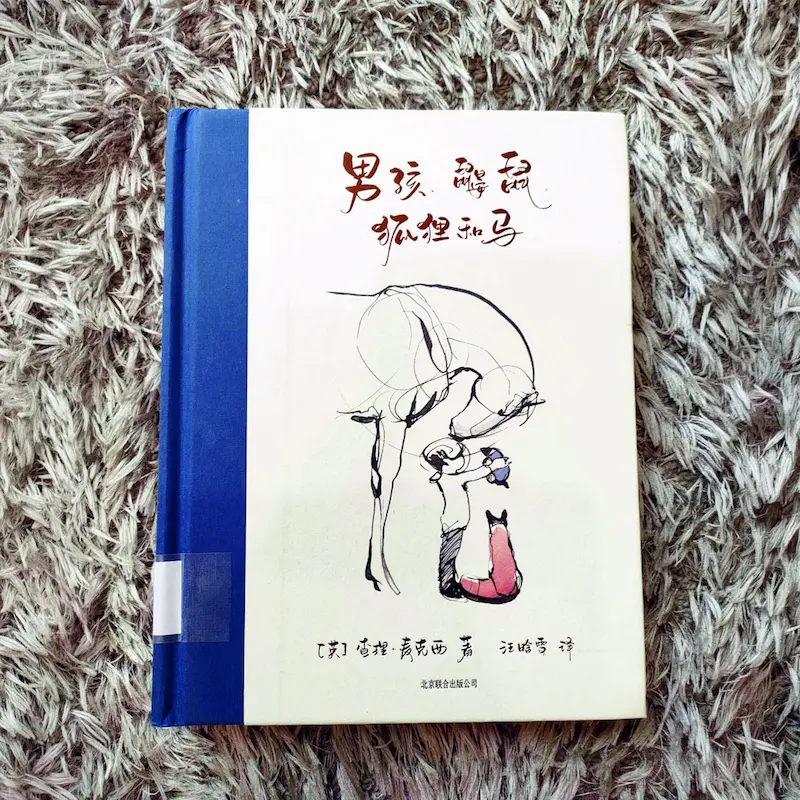
 Words are more than a tool for communication — they are a bridge leading us inward. For Certified Counsellor Chia Chew Fang from Xiao En’s Counselling and Support Department, choosing picture books as one of her mediums to guide readers through emotions and explore life is no coincidence; it is a thoughtful and gentle way of accompanying others.
This time, she shares the picture book The Boy, the Mole, the Fox and the Horse — a story centred on the journey of a boy and his encounters with a mole, a fox, and a horse. At first glance, it feels like a simple story. Yet as the pages unfold, so do quiet questions about life, fear, relationships, and ourselves.
Chew Fang admitted that when she first came across the book, she had not intended to use it as a resource for life education. She was simply drawn to one particular page while reading.
“ That feeling of liking it was completely instinctive,” she recalled.
Created entirely by author and illustrator Charlie Mackesy, the work first began as a series of casual sketches shared on social media before gradually evolving into a complete picture book. Unlike conventional narrative-driven stories, it does not follow a strong or obvious plot progression. Instead, through the conversations between its characters, it gently unfolds a quiet journey of the heart.
For Chew Fang, that is precisely what makes this picture book special: its “openness” and “dialogue”.
The story begins with a boy meeting a mole in the snow. As their journey continues, a fox and later a horse join them. Each of the four characters carries a distinct personality: the boy is full of questions; the mole is spontaneous and simple; the fox is guarded by past hurt; and the horse responds with the calm wisdom of a gentle guide.
Their interactions do not aim for dramatic climaxes. Rather, through brief yet profound exchanges, they invite readers to reflect.
“ What do you think is the biggest waste of time?” asked the boy.
“ Comparing yourself to others,” replied the mole.
Sentences that seem light and understated often strike directly at the heart.
Chew Fang explained that this is one of the main reasons she chose the book—its language is concise, yet rich in philosophy, making it ideal for repeated reading and reflection.
“ Some lines only reveal new meanings when revisited at different stages of life.”
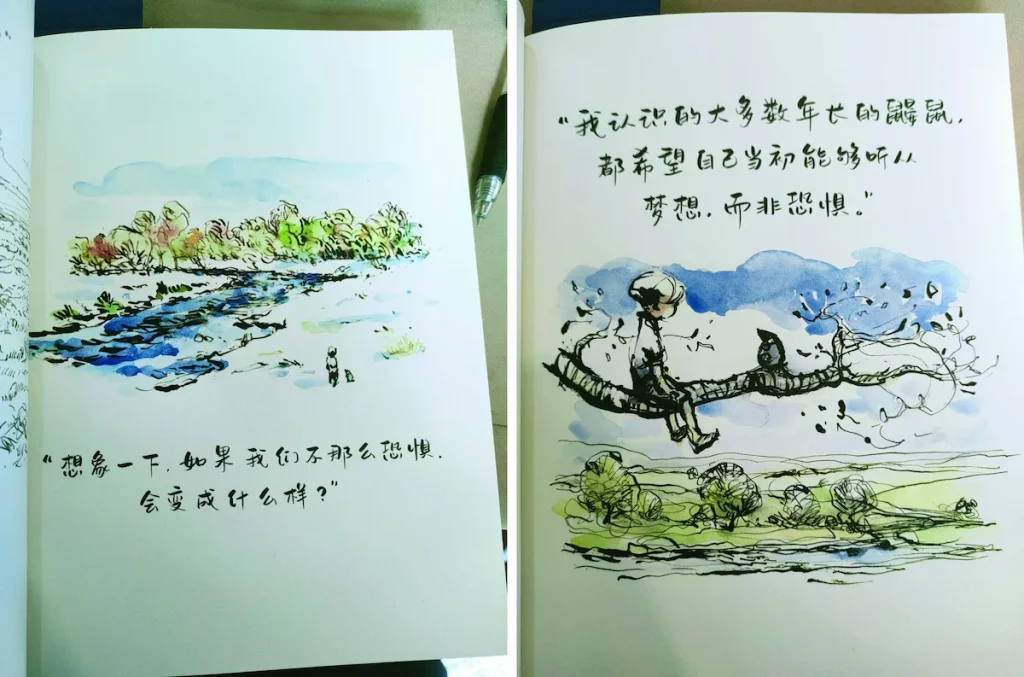
When discussing who the book is for, Chew Fang does not divide readers by age. Instead, she believes it is suitable for every stage of life.
According to her, the picture book has no fixed reading threshold. Children who cannot yet read can experience emotions through illustrations and shared reading with parents. Teenagers may begin to sense the meaning hidden in the dialogues. Adults, meanwhile, often find resonance between certain lines and their own life experiences.
“ That’s the beauty of picture books,” she said.
“ The same book reveals different things each time you read it.”
At the same time, she acknowledged that thicker picture books may require guidance and companionship for younger readers.
“ Some sentences may feel too abstract for children and need to be translated into simpler language.”
Therefore, in practice, she adjusts her storytelling approach according to the age and understanding of her audience, allowing the picture book to become an accessible and interactive medium rather than a burden to comprehend.
Although the book does not directly address death and loss, it responds deeply to a more fundamental question: How do we face life?
Chew Fang highlighted that throughout the book there are recurring discussions about fear, comparison, self-worth, and asking for help.
One memorable exchange occurs when the boy asks the horse: “ What is the bravest thing you’ve ever said?”
The horse replies: “ Help.”
Chew Fang pointed out that this is something many people struggle to do.
In real life, many people see asking for help as weakness. Yet this story gently reminds us otherwise. Sometimes, asking for help is already a form of courage. A quiet refusal to give up.
The book also repeatedly emphasizes the importance of being kind to ourselves — from not comparing ourselves with others, to accepting vulnerability, to recognising our own value. These themes run quietly through the entire journey.
Chew Fang believes this is not only a reminder for individuals but also a gentle response to modern life. “ We are so used to measuring ourselves by external standards that we forget our inner needs.”
She believes that books like this are not only meant to be read, but to be used. Whether in promoting life education or creating moments of parent-child reading, such stories can become mirrors that help people rediscover themselves and their relationships with others.
“ Maybe we cannot change everything immediately,” she said softly, “ but at least we can begin by learning to treat ourselves with kindness.”
This Original article first appeared in《 PUMEN普门 》magazine. [ Click Here ]
Copyright Statement
This article and video is original content created by Xiao En website, to whom the copyright belongs to. The content should not be reproduced without permission, otherwise it will be regarded as infringement. Xiao En reserves the right to pursue legal action against unauthorised use of the content.

