
Leave the Rules to the Process, Leave the Warmth to People
-
By Admin
One day, my supervisor came to the funeral parlour for an inspection and happened to meet a family keeping vigil for their loved one. He stopped to check in on them and asked about their experience and the services provided. Without hesitation, one of the family members replied, “If I told you we were completely satisfied, would you believe me?”
Standing nearby, I knew it was said half-jokingly, but hearing such affirmation still warmed my heart.
Because in many moments, the quiet efforts we make are often known only to ourselves.

As Bereavement Care Professionals, we are often described as “walking encyclopedias”, the ones who understand every detail of funeral rites and customs. Yet the actual time we spend beside the family is often only those two or three days during the funeral. Inside the funeral parlour, we explain procedures, serve tea, and attend to the family’s needs. More often than not, I simply stand quietly nearby.
As long as you need me, all you have to do is turn around and I will be there.
Once we leave that small parlour, we return to the unseen parts of our work and continue with our daily routines: hand-cutting mourning ribbons and waistbands, preparing offerings, arranging ceremonial items needed throughout the service, and countless other tasks.
Most of the time, very few people truly know who the “Bereavement Care Professional” is. More often, we are simply grouped under “other staff” in feedback forms.
That casual remark from the family that night caught me by surprise.
Because truthfully, I have never been a “strictly by-the-book” bereavement care professional.
The Little Things Beyond Procedure
This happened before the pandemic, on a night when one family had decided to stay overnight to keep vigil.
According to the guidelines, each funeral parlour could provide three blankets for the family. But this family was large, around eight or nine people, and three blankets were nowhere near enough.

After thinking about it for a while, I went to the other parlours to check how many people were staying overnight there. I gathered the unused blankets from those spaces and brought them over to this family.
In a way, I had broken the rules. But more than anything, I simply wanted things to feel complete for them.
Among those keeping vigil that night were several young people who had brought instant noodles in case they got hungry. Before I left, they asked me for hot water. Although every parlour already had some prepared, it still was not enough for everyone.
So once again, I “broke” the rules.
Fortunately, it was already late at night. With my supervisor’s permission, I returned to the office, moved an unused water dispenser into the parlour for the family to use, and before work resumed the next morning, moved it back to the office. I repeated this routine over the next two or three days.
It was only after hearing the family casually mention “full marks service” that I realised something. The things we quietly do, without ever speaking about them, are still felt and understood.

I have always believed these actions do not need to be announced for others to know. If the family can genuinely feel cared for because of them, that alone is already the greatest form of recognition.
Tradition, Reunderstood
To me, helping families find peace and leave without regret matters far more than blindly following rules. Especially when it comes to funeral traditions and customs.
Even today, when facing the loss of a young life, some still follow the old belief that “those with white hair should not send off those with black hair”, causing parents to avoid attending the final farewell.
But honestly, what parent would not want to personally accompany their child on their final journey?
As bereavement care professionals, I believe we have a responsibility to help families understand the historical context and origins behind these customs.

At the same time, we should also help them see that as times change, many traditions can still be practised in gentler and more compassionate ways that better care for the emotions of the living.
I simply hope that while preserving the meaning behind these traditions, we can also make space for gentleness, compassion, and the emotions of those saying goodbye.
Because change does not mean rejection.
Sometimes, change happens precisely because people today possess a deeper understanding and a more mature way of caring for one another.
I have always believed the true purpose of rituals and customs is not to leave people with regret, but to help a farewell be fully and properly completed.
And in this era, beyond understanding tradition, we should also have the ability to reflect, discern, and learn how to coexist with tradition rather than becoming blindly confined by it.
At funerals, after relatives and friends offer condolence contributions, families usually return a small token gift in appreciation. In the past, these packets contained leaves believed to offer protection. Today, they are often replaced with sweets. To me, this is a deeply meaningful gesture. The candy becomes a small comfort amid grief, while also carrying hope for the days ahead.
A small sweetness, quietly left behind amid grief.
Speaking of Farewells, Again
I never imagined I would one day speak openly about these thoughts, until I became a life education guide.
Standing before students, I slowly began organising the routines of my daily work. Actions that had once become mechanical and numb gradually turned into a complete story and process. Only then did I realise that this work is not only something we do. It is also something we can speak about.
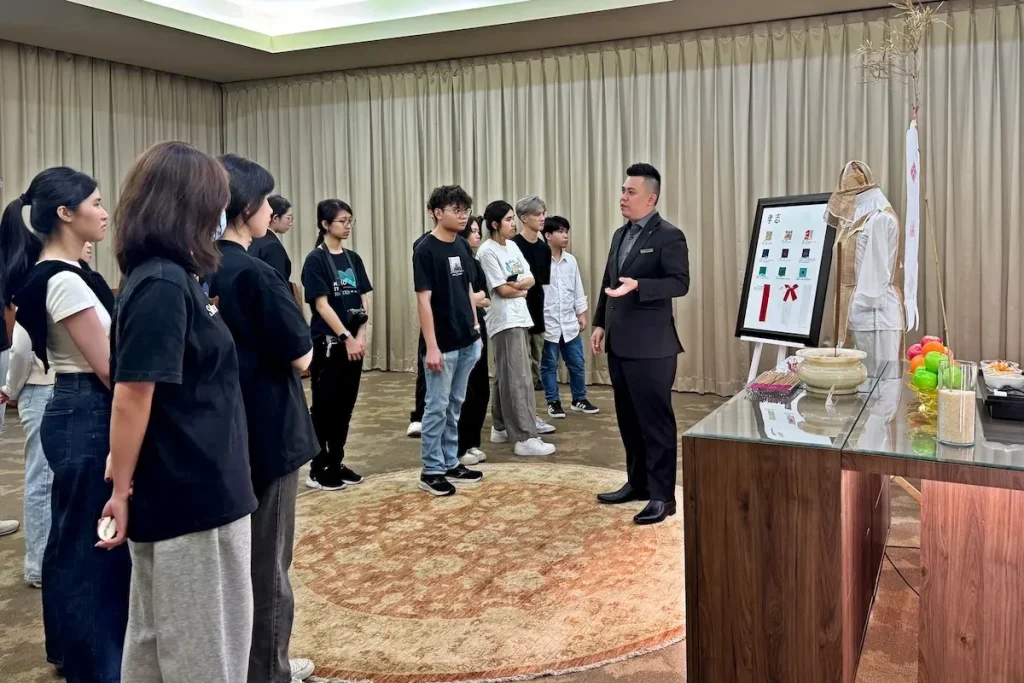
After more than 18 years in this profession, I still encounter different families and different cases every single day. To me, every entrusted farewell is unique. Faced with each family’s confusion and questions, I offer different answers. Faced with their regrets, I do my best to help ease them. Through countless conversations with families, their thoughts and experiences have gradually helped me see more possibilities in what a farewell can become. Old and new were never meant to stand against each other. Rather, it is through understanding that both are able to complete one another.
(Editor’s note: This article is based on the author’s oral sharing, written by The Interview’s reporter.)
This Original article first appeared in《 The Interview 》. [ Click Here ]
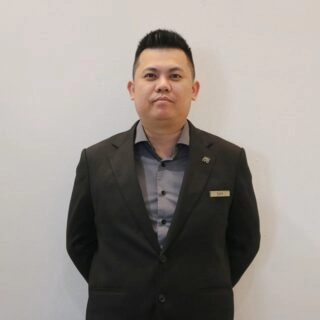 |
Tan Will Son, SamWith 18 years of experience as a Bereavement Care Professional at Xiao En, he has remained committed to the belief that a funeral is not merely about completing a process, but about caring for people. From his first day in the profession until today, he has worked with the understanding that every farewell carries emotional weight. Between procedures and reality, he chooses to leave empathy for those who remain. |
|||
Copyright Statement
This article and video is original content created by Xiao En website, to whom the copyright belongs to. The content should not be reproduced without permission, otherwise it will be regarded as infringement. Xiao En reserves the right to pursue legal action against unauthorised use of the content.

