
An Enduring Legacy of Love for Future Generations
-
By Admin
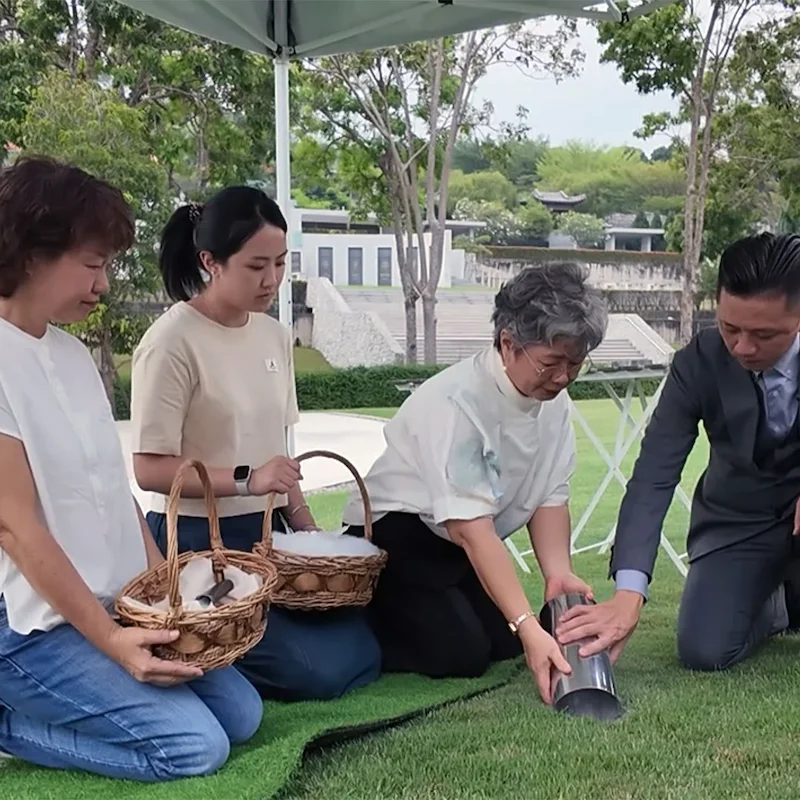
When Mr. Lee passed away, his children opened a handwritten will that had first been written in 2018 and carefully revised again in 2020. Only then did they truly understand the strength their father had carried throughout a lifetime marked by few words and quiet restraint. Within those few pages were wishes expressed with remarkable clarity: no tombstone, no extravagance, no occupation of land, and no burden placed upon future generations. Instead, he chose to donate his body as a “Silent Mentor” for medical education, and to allow his ashes to return to the soil — so that life could complete its final journey in the lightest possible way.
This simple, handwritten will — just a few pages long — embodied a father’s selfless spirit and a humble reverence for nature. Such a profound act of leading by example became an enduring legacy of love, one that continues to influence generations to come.
Out of respect for the deceased, when newspapers published the obituary noting Mr. Lee’s body donation, questions inevitably arose among relatives and friends. “Wouldn’t the funeral be too simple?” some asked. “Without a tombstone, what will others think?” The family patiently explained his wishes and eventually chose to make the will public.
His eldest daughter, Lee Wee Nee, explained, “This was my father’s choice — to embrace simplicity and freedom. Honouring his wishes was our way of respecting him.” With that, all doubts quietly came to rest.
Reflecting on her father’s passing, Lee Wee Nee shared, “I am the greatest beneficiary. Only after my father left did I truly understand the lightness and kindness of life. I finally realised what he wanted to teach us — that death is not an ending, but a continuation of life education.” In this way, leading by example took on another form of ‘living on,’ becoming the most precious inheritance left to the next generation.
Fulfilling this final wish also brought the family into a profound dialogue with life itself. At first, they were simply carrying out instructions. But through the entire process — from body donation, cremation, the careful grinding of ashes, to ash interment burial — they came to understand their father’s philosophy of “lightness.” This lightness was never a disregard for life, but rather a conscious choice to return life’s weight to the land, to coexist with the ecosystem, and to allow love to remain.
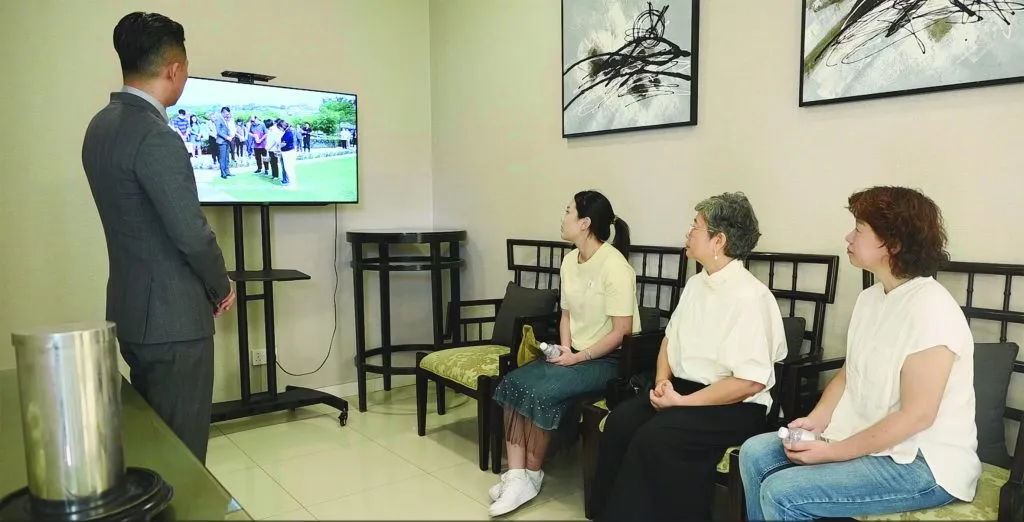
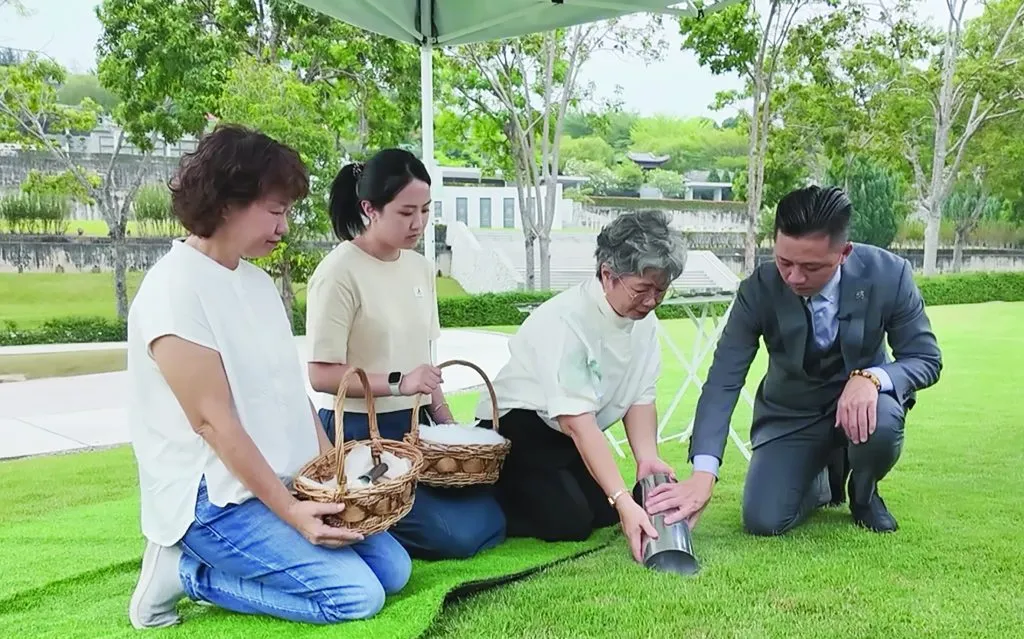
Ash burial is a relatively environmentally friendly form of farewell. It involves no tombstone, no constructed grave, and no permanent structures. After cremation, the ashes are finely ground into powder. Family members personally place the ashes into a shallow soil pit, which is then covered with turf and topsoil. This process ensures that the ashes do not add burden to the soil, reduces carbon footprint, and allows the remains to decompose naturally and return to the earth. While conserving land resources, it also elevates funeral practices through environmental awareness, cultural refinement, and the humanistic values of leading by example. In 2023, Malaysia’s first ash interment burial was carried out at Xiao En Memorial Park in Nilai.
As a key proponent of ash interment burial, Xiao En Group’s Managing Director, Dato Frank Choo, shared that several years ago, he and his team travelled to Taiwan’s Dharma Drum Mountain to study the practice. They later adapted it to Malaysia’s local climate, religious diversity, cultural context, and land conditions. Under the invitation and leadership of the Negeri Sembilan state government, the initiative was jointly developed and implemented. Dato Frank emphasised that this approach is not intended to replace traditional funeral practices, but to provide families with an additional, autonomous choice for end-of-life arrangements.
At the frontline of these services, funeral practitioner Mr. Sunny Tan Wan Sun has witnessed countless moments of parting before and after the pandemic. He observed that in the post-pandemic era, families are no longer focused solely on making funerals “simple,” but are increasingly concerned with the “meaning” behind each ritual.
“During the pandemic, many families experienced the regret of not being able to hold a proper farewell for their loved ones. That collective experience resonated deeply across society,” Sunny reflected. He added that ash interment burial does not diminish ritual; rather, it deepens the essence of farewell. “Because family members personally place the ashes into the soil, their level of participation becomes much deeper. It allows them to complete their loved one’s final journey with their own hands. This participation helps grief to be gradually acknowledged and accepted.”
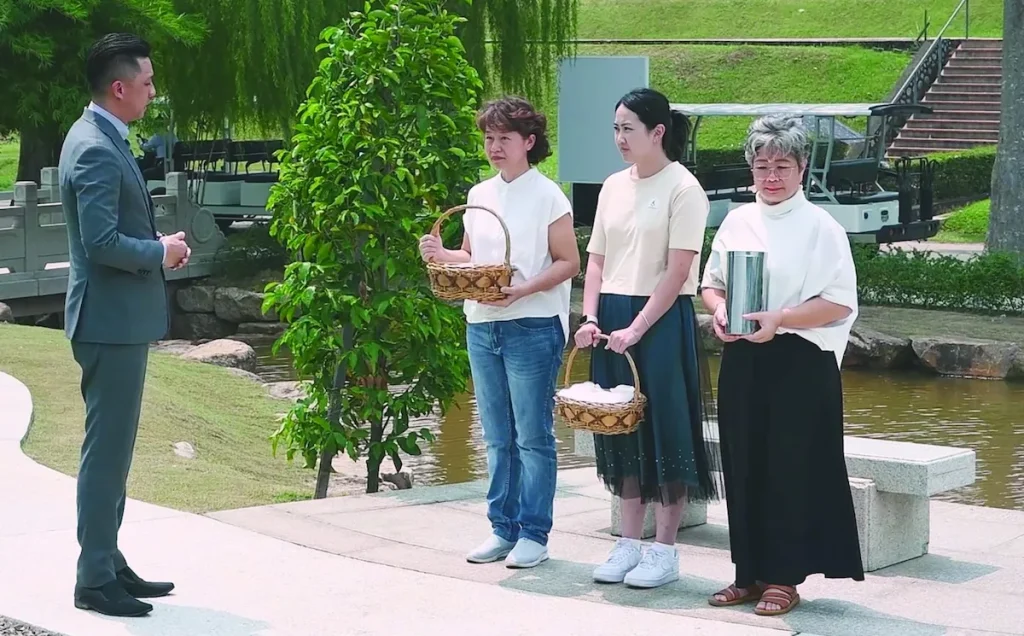
According to recent studies on public attitudes toward advance life planning, most people hope that their passing will not become a burden to the next generation. Sunny further noted that interest in environmentally conscious burial options has continued to grow in the post-pandemic period. These changes do not represent a rejection of tradition, but rather a wish for connections with loved ones to move beyond external forms and be held instead within the heart.
Beginning with a single handwritten will left by Mr. Lee Tee Meng, what we see is not merely a father’s personal arrangement for his final journey, but a life choice that speaks to society and to the future. When leading by example continues through farewell, death is no longer only an ending — it becomes a form of life education grounded in responsibility, humility, and love. In this way, a personal final wish can quietly leave behind enduring value — for families, and for society at large.
This Original article first appeared in《 PUMEN普门 》magazine. [ Click Here ]
Copyright Statement
This article and video is original content created by Xiao En website, to whom the copyright belongs to. The content should not be reproduced without permission, otherwise it will be regarded as infringement. Xiao En reserves the right to pursue legal action against unauthorised use of the content.

