
Beyond the Boundaries of Skin Color, a Proper Farewell Brings Us Closer
-
By Admin
I never imagined that one day I would become a Bereavement Care Consultant — much less a Muslim Bereavement Care Consultant working in the Chinese funeral industry.
The first time I stepped into Xiao En, I was merely a part-time service staff member. Not far away, I noticed two ritual leaders conducting ceremonies in different halls. One was bald, his expression calm and composed; the other had thick hair and moved with brisk precision. Puzzled, I asked a colleague beside me, “Why do they look so different?”
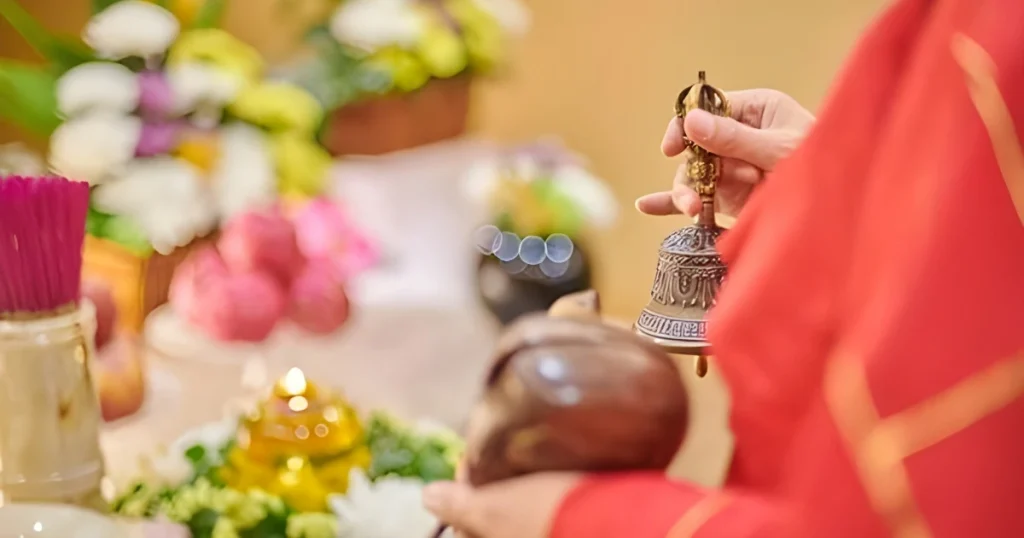
He explained, “The one without hair is a Buddhist monk; the one with hair is a Taoist priest.” Looking back, it sounds almost comical. Yet someone like me — who knew nothing about Chinese customs — somehow ended up becoming a Bereavement Care Consultant.
In that moment, I found rituals fascinating. I never expected that, coming from a completely different culture, I would be so naturally accepted here — given space to learn, to participate. That sense of respect was something I only fully understood in hindsight.
Learning a New Language, Learning to Accompany
Did my parents object? They simply said, “It’s your decision.” Of course, I had to be clear about the boundaries between work and faith. What I did not expect was that this path would become a seven-year journey.
Seven years ago, I couldn’t speak Mandarin — let alone Cantonese. Many elderly family members and ritual masters spoke Cantonese, and I understood nothing. Seeing that I was Malay, some families were understandably doubtful. I understood their concerns; all I could do was prove myself through action.
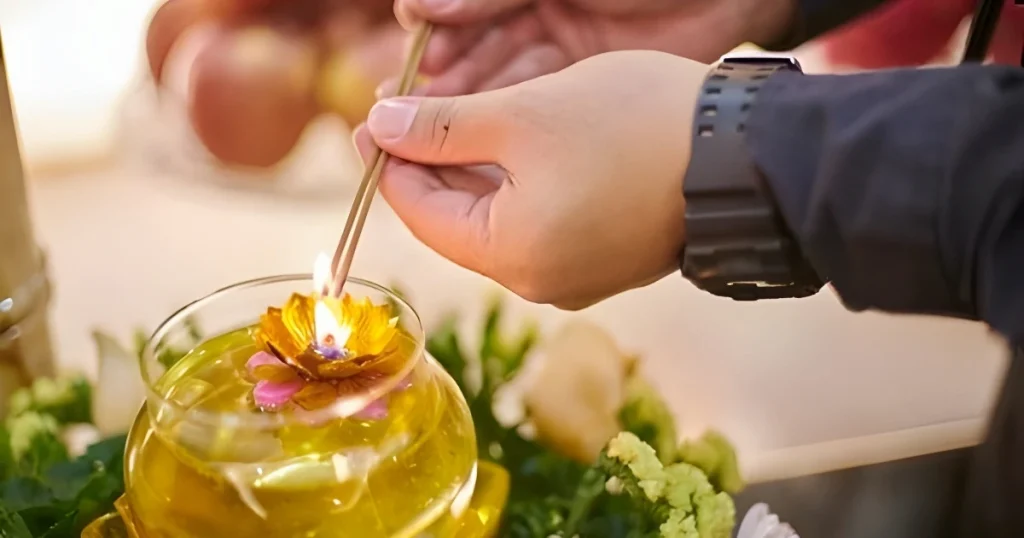
I taught families how to perform rituals, guided them in offering incense, bowing, and explaining the meaning behind each step, reminding them of important details. When the ritual master chanted scriptures I could not read, I followed the phonetics line by line. Over time, the cadence and intonation stayed with me. Sometimes the family couldn’t keep up with the chanting; I would stand beside them, pointing quietly at the phonetic text and whisper, “Here.”
Gradually, language became more than a tool — it became a bridge, allowing me to cross over and move closer to them.
What Rituals Have Taught Me
Chinese funeral rites are filled with delicate details. In Taoist ceremonies, for instance, one lantern bears the deceased’s name, another their age. Hokkien families place green apples on the offering table. Taoist rites involve meat offerings, Buddhist rites are vegetarian.
Pregnant women are advised not to stand too close to the coffin. Before the funeral procession, a pair of chopsticks and a red packet containing ginger are prepared. If the ginger does not spoil after the funeral, it is boiled into water for the expectant mother to drink. The chopsticks are kept until the child is born and used for their first meal.
” These customs may seem complicated, but they are all expressions of love, protection, and blessing. It was through these details that I understood: a Bereavement Care Consultant is not merely executing procedures, but safeguarding meaning. “
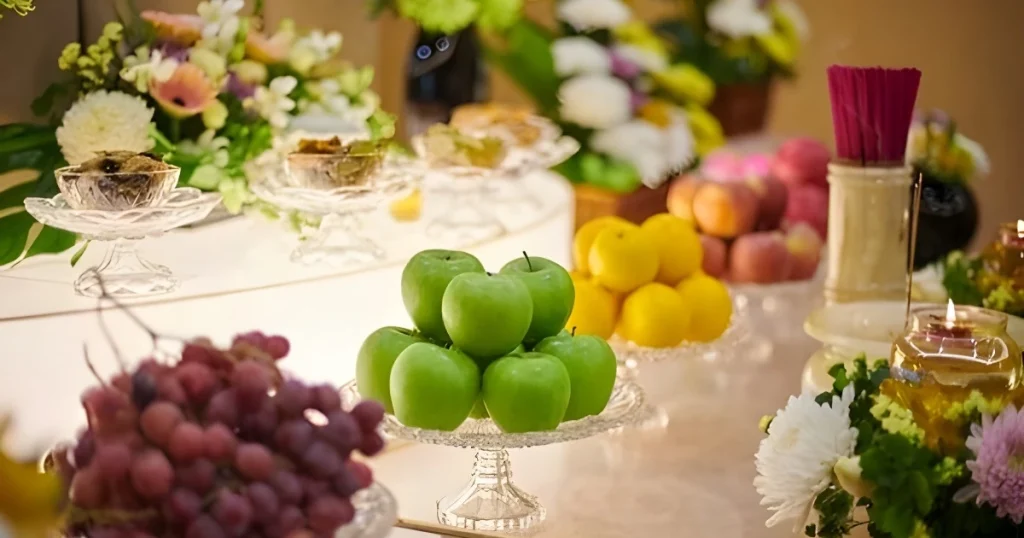
You may still wonder: what exactly does a Bereavement Care Consultant do?
From receiving the body, setting up the wake, arranging offerings, leading the funeral procession, cremation, collecting the ashes, to sealing the urn — each step carries weight. For the family, it is the final farewell. For me, it is a trust placed in my hands.
Making People Feel at Ease
In the city, ceremonies follow standard procedures. In rural areas, anything can happen.
Some regions have closed funeral ecosystems; outside teams may be seen as competitors, creating tension. At times, pressure comes through words or gestures. On those nights, we must steady the family’s emotions while ensuring the ceremony proceeds smoothly. Inside, we may be anxious — but the family must never feel it.
Being a Bereavement Care Consultant is paradoxical: you deal with death, yet your responsibility is to bring reassurance to the living — to help them feel at ease.
This work is ultimately about relationships. Calming a human heart is far more difficult than arranging a wake or coordinating rituals.
Years ago, I handled a funeral where a husband had passed away; a year later, the son followed. On the day of the funeral, what was once a complete family was reduced to a single mother leaning against the coffin.
When it came time to seal the coffin, she clutched it, crying as though her body might collapse. Half an hour passed. Grief came in waves, relentlessly crashing. We stood by, unable to proceed.
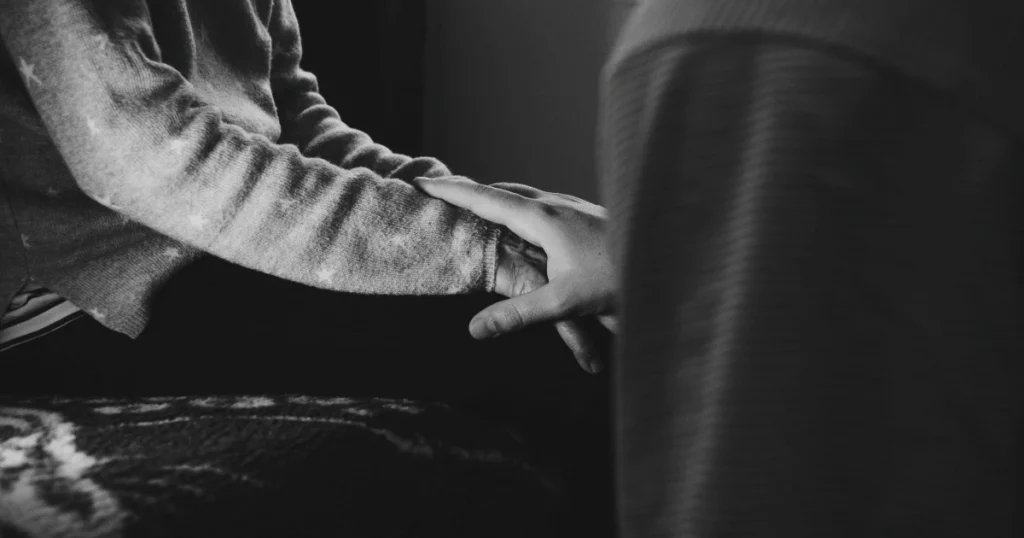
At that moment, I thought: if the person in the coffin were me, what would my parents feel? For the first time, I truly understood that regardless of faith, culture, or background, the pain of loss is the same.
Saying the Last Words
This work changed me. I used to be hot-tempered and rarely called home. Now, I am gentler. When accompanying grieving families, I often think of my aging parents.
None of us knows how much time we have.
Years ago, I quarreled with a close friend over something trivial. A day or two later, guilt set in and I decided to visit him for dinner. When I arrived and asked his mother, “Ibu, where is Aiman?”
“Aiman is not here,” she said.
I thought she meant he was out — until she repeated it, tears falling. Only then did I understand that “tak ada” meant he was no longer in this world. He had passed away in his sleep. I was angry at myself — angry that I hadn’t been kinder the last time we met. By the time I wanted to make peace, he had already been buried.

Since then, before sealing a coffin, I give families an hour alone with their loved one. In that quiet space, whatever was left unsaid can finally be spoken.
Because once this moment is missed, it becomes a permanent farewell. The departed move forward — and never turn back.
Life Has No U-Turn
Driving a hearse is much like life itself. There is a taboo: no U-turns. Before a procession, we familiarize ourselves with the route. I vividly remember my first time driving a hearse.
Usually, there is a driver and family members. That day, the deceased was single. For over twenty minutes, it was just him and me. I gripped the steering wheel, driving as steadily as I could — when suddenly, a loud bang echoed from behind.
My heart raced. I dared only glance at the rearview mirror, silently pleading, “Please, don’t get up.” After the inner turmoil subsided, I discovered it was merely an unlocked latch.
It took me a year to truly let go of that fear. Why do people fear death? Often, it is because they do not understand it. When you realize you are helping someone complete their final journey, the fear fades.
My wife used to be afraid too — worried that spirits might follow us home. I told her there was nothing to fear. What we do is good for the departed. Only those who act with a guilty conscience, as elders say, have reason to be afraid.
Over time, she found peace as well.
Eventually, I understood: all religions, at their core, teach kindness — and how to say goodbye well.
At funeral grounds, I have witnessed people of different cultures doing the same thing: sending their loved ones off in their own way. And in that moment, I realized — we are far closer to one another than we imagine.
(Editor’s note: This article is based on the author’s oral sharing, written by The Interview’s reporter.)
This Original article first appeared in《 The Interview 》. [ Click Here ]
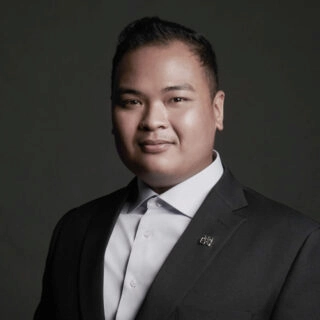 |
Muzammil bin Ahmad JufriA Muslim Bereavement Care Consultant who entered the unfamiliar world of Chinese funeral services, learning inclusivity and companionship across religious and cultural boundaries. He discovered that regardless of differences in faith, the pain of loss and the longing for love are universal — and that funeral work can become a bridge that connects people and cultivates empathy. |
|||
Copyright Statement
This article and video is original content created by Xiao En website, to whom the copyright belongs to. The content should not be reproduced without permission, otherwise it will be regarded as infringement. Xiao En reserves the right to pursue legal action against unauthorised use of the content.

